 By codebitmatrix@gmail.com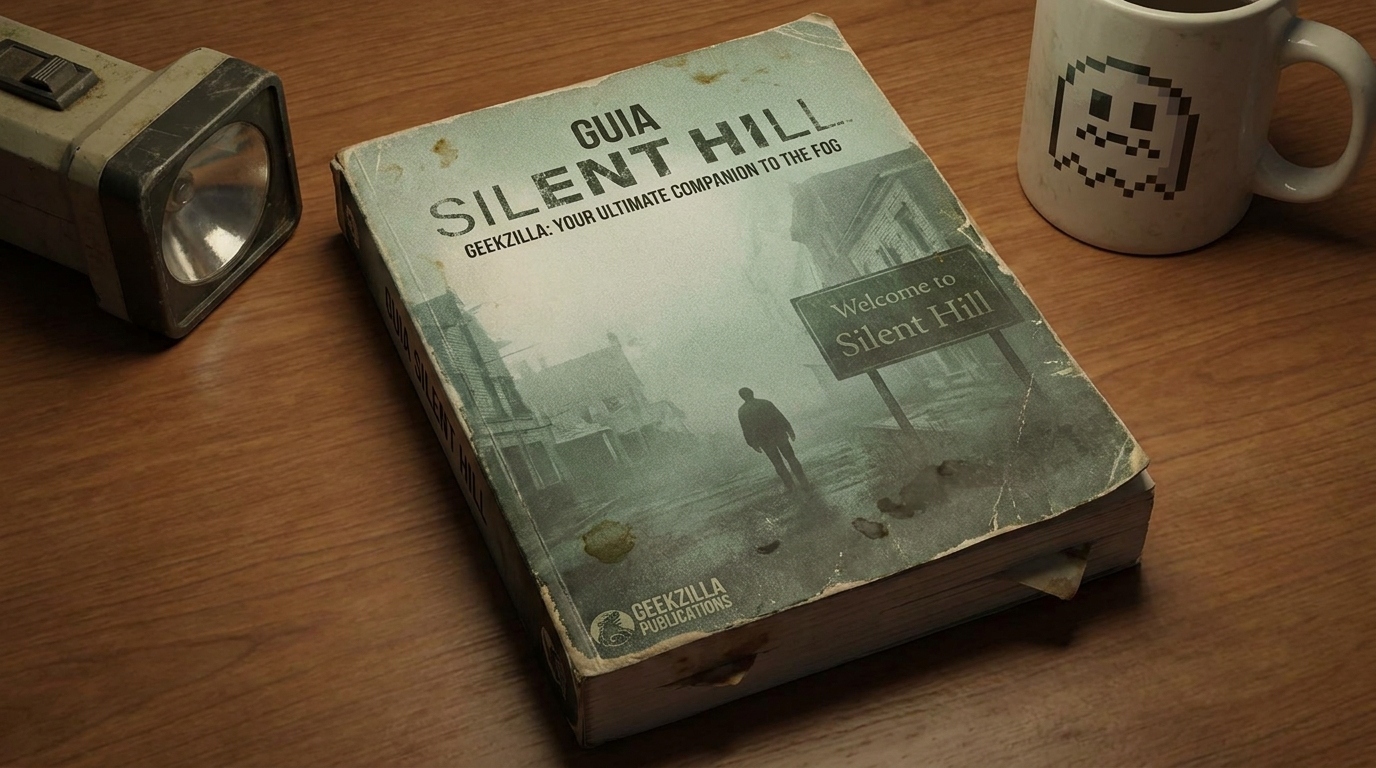
The town calls to you. Quietly. Relentlessly. If you’ve ever wandered through fog-laden streets, radio crackling with static, heart racing for reasons you can’t quite explain, you already understand why Silent Hill is different. This Guia Silent Hill Geekzilla exists for one reason: to help you truly understand the Silent Hill universe, not just survive it. This is not a surface-level walkthrough. It’s a deep dive into psychological horror, immersive storytelling, and the unsettling mechanics that made the Silent Hill series a pillar of the horror genre.
What Exactly Is the Guia Silent Hill Geekzilla?
First, let’s clear up any confusion. This isn’t an official strategy guide published by Prima Games or Piggyback Interactive. Honestly, that’s its greatest strength. The Guia Silent Hill Geekzilla is a passion project—a comprehensive, fan-made resource dedicated to deconstructing the entire Silent Hill series. Created by a superfan operating under the alias “Geekzilla,” this guide transcends the basic “go here, do this” format.
Think of it as a love letter to the franchise’s complexity, written by someone who has not only played the games but has truly studied them. It’s the ultimate companion piece for anyone who wants to move from being a player to becoming an understander. Unlike traditional guides that focus on checklists and walkthrough steps, the Guia Silent Hill Geekzilla goes deeper. It explains why things happen, not just what to do. You get real insight into psychological horror, monster symbolism, and immersive storytelling, which makes the gameplay experience feel richer and more personal.
Read: escape road unblocked
Beyond the Walkthrough: What Makes This Guide Special?
The Guia Silent Hill Geekzilla stands out because it treats Silent Hill as both a game and a psychological experience. Every monster, hallway, and puzzle has meaning. Every mechanic reinforces the story. Its approach focuses on real gameplay strategies, not exploits; narrative immersion, not spoilers for shock value; lore accuracy grounded in canon and developer intent; and respect for the Silent Hill community and decades of fan interpretation.
Symbolism and Psychology: The Real Monsters
Any hack writer can list enemy stats. It takes a special kind of nerd—the good kind—to explain the psycho-sexual trauma manifesting as the Abstract Daddy in Silent Hill 2. This is where Geekzilla’s work shines.
The guide meticulously breaks down the symbolic meaning behind every facet of the games. The ever-present fog? It’s not just a clever way to hide PS1 draw distances; it’s a manifestation of the unconscious mind, obscuring painful truths. The shift to the rusted, metallic Otherworld? A brutal, industrial reflection of pain and punishment.
Geekzilla acts as your therapist and art critic, unpacking why James Sunderland sees the world he does, why Heather Mason’s monsters look different, and how the series uses its visual and auditory language to communicate themes of guilt, abuse, loss, and religious extremism. You’ll finish a section and have a dozen “Aha!” moments about details you’d previously glossed over. For instance, the guide explains the symbolism of key monsters:
| Monster | Symbolism |
|---|---|
| Pyramid Head | Punishment, guilt, sexual repression |
| Nurses | Vulnerability, illness, distorted desire |
| Lying Figures | Suffocation, shame, emotional confinement |
These aren’t random enemies. They are manifestations of subconscious fear and emotional symbolism. Combat reinforces this idea. Enemies don’t rush you like action-game foes. They stagger. They twitch, They hesitate. The result is narrative tension instead of adrenaline.
Lore Synthesis: Connecting the Otherworldly Dots
The Silent Hill lore is a beautiful, fascinating, convoluted mess. The timeline stretches across centuries, intertwining the town’s ancient spiritual history with the modern Order cult and the personal hells of its visitors. Geekzilla’s guide does the heavy lifting of synthesizing this information from across games, spin-offs, and even canceled projects. It presents a cohesive(ish) picture of the town’s power, the role of the cult, and how different characters influence and are influenced by the entity that is Silent Hill.
Character Deep Dives: More Than Just Survivors
We don’t just remember Silent Hill for its monsters; we remember its people. Did you ever stop to consider the deeper implications of Harry Mason’s everyman persona? Or the tragic, nuanced pathology of Walter Sullivan from Silent Hill 4: The Room? This guide does. It offers character analyses that explore their backgrounds, motivations, and flaws. It treats them not as avatars for the player, but as broken people navigating a personalized purgatory. You’ll gain a new appreciation for the writing and understand why these characters remain iconic decades later.
Geekzilla’s Guide vs. Standard Walkthroughs
Let’s make this crystal clear. This isn’t an academic essay; it’s a practical breakdown.
| Feature | Standard Online Walkthrough | Guia Silent Hill Geekzilla |
|---|---|---|
| Primary Focus | Progression, puzzle solutions, item locations | Understanding themes, symbolism, lore, and deeper meaning |
| Enemy Information | Health points, attack patterns, best weapons to use | Psychological meaning, symbolic representation, connection to protagonist’s psyche |
| Puzzle Solutions | “Input this code.” / “Play this melody.” | “Here’s why this puzzle exists narratively and what its solution represents.” |
| Story Summary | “This happened, then this happened.” | “This event is a metaphor for this character’s trauma, and it connects to this larger lore element.” |
| Best For… | First-time players stuck on a puzzle or finding a key | Returning fans who want to appreciate the game on a profoundly deeper level |
See the difference? One gets you through the game. The other gets the game into you.
Gameplay Mechanics You Need to Master
The Guia Silent Hill Geekzilla also provides essential survival strategies for navigating the horrors of Silent Hill.
Survival Basics
Silent Hill punishes reckless play. Survival depends on restraint. Conserve ammunition at all costs, avoid unnecessary combat, and learn enemy audio cues. Running away is often the smartest option. This is a key lesson: the goal is to survive, not to kill everything. You get zero experience points or loot for killing most standard enemies.
Inventory Management
Your inventory defines your survival window. Prioritize health packs, carry melee weapons early, and save firearms for emergencies.
Combat Mechanics
Combat exists to create stress, not empowerment. Use melee weapons to conserve ammo, fight only when trapped, and exploit enemy recovery animations. The awkward controls are intentional; they force vulnerability.
Puzzle-Solving Without Breaking Immersion
Puzzles scale with difficulty settings and often involve literary references, environmental clues, and symbolic associations. Read every document, observe wall markings, and trust thematic consistency. Puzzle-solving supports narrative immersion, not busywork. A great tip from the community is to keep a real-life notepad handy. When you find a riddle, jot it down. This saves you from having to run back and forth across a building just to re-read the clue.
The World of Silent Hill: Environment and Atmosphere
The environments in Silent Hill are characters in their own right. The Guia Silent Hill Geekzilla breaks down iconic locations and explains how they contribute to the horror.
The Town of Silent Hill Explained
Silent Hill isn’t haunted in the traditional sense. The town doesn’t chase you. It reflects you. At its core, the Silent Hill universe operates as a psychological mirror. The town manifests a person’s internal struggles, shaping environments, monsters, and events around their subconscious fears.
Fog World vs. Otherworld
One of the most misunderstood elements of the Silent Hill franchise is its dual realities.
| World State | Description | Psychological Role |
|---|---|---|
| Fog World | Empty streets, muted colors, isolation | Suppression, denial |
| Otherworld | Rusted metal, blood, industrial decay | Confrontation, truth |
The transition between these states isn’t random. Sirens often signal a forced confrontation with buried trauma. This design reinforces environmental storytelling without relying on exposition.
Sound Design and Atmosphere
One of Silent Hill’s most powerful tools is its sound design. Composed primarily by Akira Yamaoka, the music blends ambient tones, industrial noise, and haunting melodies. The Guia Silent Hill Geekzilla highlights how this soundscape enhances mood, manipulates tension, and creates psychological immersion. Silence is used as tension, ambient noise replaces jump scares, and music reflects the emotional state. This elevates horror immersion beyond visuals.
Embracing the New: Silent Hill f
The Guia Silent Hill Geekzilla also covers the latest entries in the franchise, including the newest game, Silent Hill f. This is a bold new direction for the series, moving away from the sleepy American towns to rural 1960s Japan. The game follows Hinako Shimizu as her hometown of Ebisugaoka succumbs to a deadly curse.
The guide helps players navigate this new setting with the same depth of analysis. It provides insights into the new gameplay mechanics, such as the Sanity gauge for Focus Attacks, the use of offers and upgrades at Hokora shrines, and the importance of Hinako’s journal for solving puzzles. It also explores the game’s themes, which delve into the horror of home, the oppression of patriarchal systems, and the erotic grotesque imagery that draws from Japanese art history.
The Silent Hill Community and Culture
The Silent Hill community keeps the franchise alive through gaming forums, lore theory discussions, fan art and remixes, and fan-developed mods. The Guia Silent Hill Geekzilla also honors the voices of the Silent Hill community—from fan theories about secret endings to debates about character motivations and narrative ambiguities. This interactive element makes the guide not only informative but participatory, encouraging fans to form their own interpretations.
Conclusion: Why Silent Hill Never Lets You Go
Silent Hill stays with you because it speaks softly. It doesn’t scream. It waits. The Guia Silent Hill Geekzilla isn’t about mastering mechanics alone. It’s about understanding why the town feels alive. Why its immersive storytelling cuts deeper than most horror games.
You don’t beat Silent Hill. You survive it. And if you’re honest with yourself, it survives you too. Whether you’re just stepping into Silent Hill’s fog or revisiting its pathways with nostalgic curiosity, this guide gives you the keys to unlock the deeper meaning behind every shadow, sound, and story beat.