 By codebitmatrix@gmail.com
Potatoes are one of the most widely consumed foods around the world, loved for their versatility, affordability, and comforting taste. Among the many ways to prepare them, baking remains one of the healthiest and simplest methods. However, many people are curious about baked potato calories and how they fit into a balanced diet.
Understanding the nutritional value of a baked potato can help you make better dietary choices, whether you’re trying to lose weight, maintain your health, or simply eat smarter. In this comprehensive guide, we’ll explore everything from calorie content and nutritional benefits to toppings, portion sizes, and diet tips.
What Are Baked Potato Calories?
When people refer to baked potato calories, they are typically talking about the number of calories found in a plain potato that has been cooked in the oven without added fats or oils.
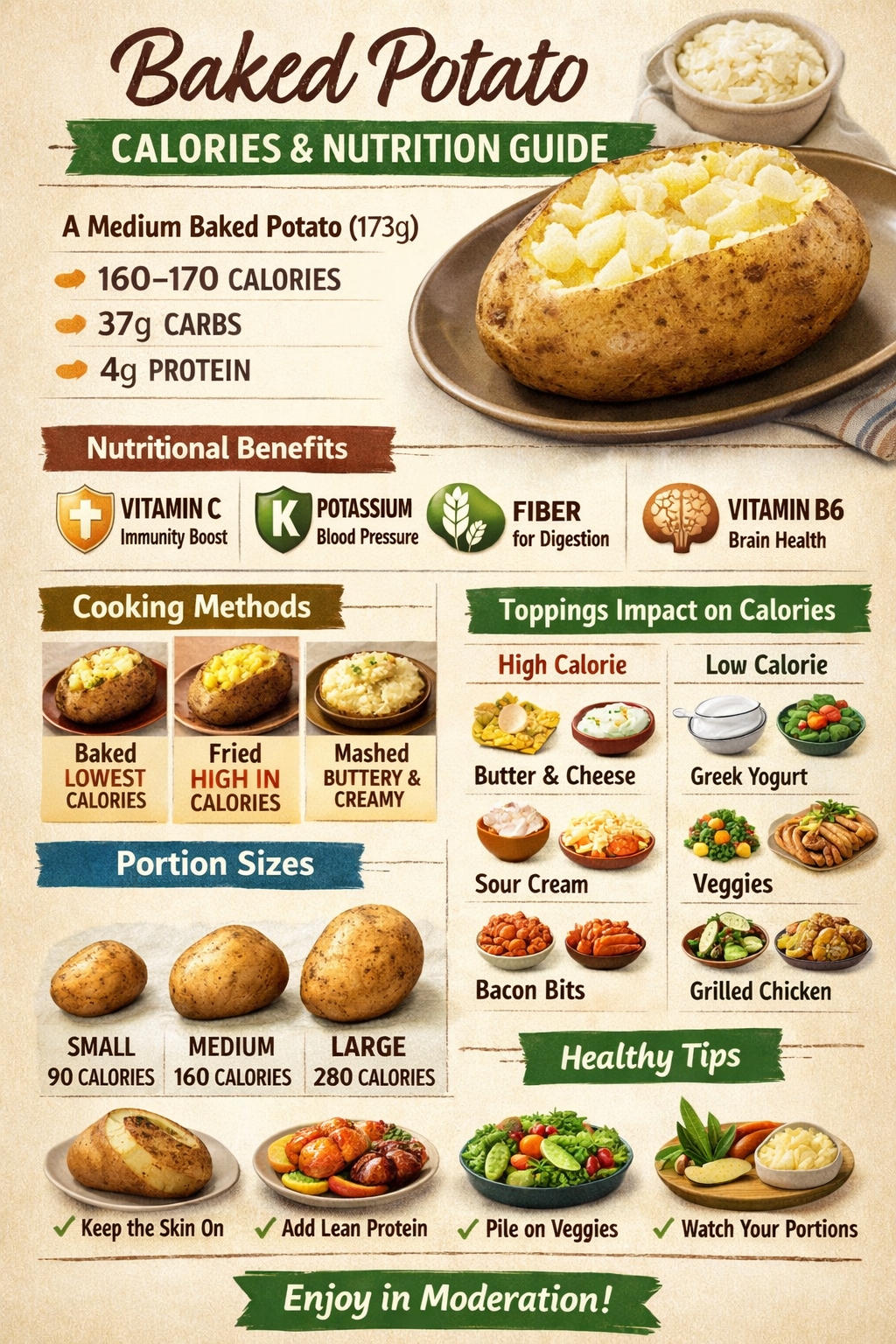
A medium-sized baked potato (about 173 grams) contains approximately:
- 160 to 170 calories
- 37 grams of carbohydrates
- 4 grams of protein
- 0 grams of fat
These numbers can vary depending on the size and type of potato, but overall, baked potatoes are relatively low in calories and high in nutrients.
Nutritional Profile of a Baked Potato
Beyond just baked potato calories, potatoes are packed with essential nutrients that contribute to overall health.
Key Nutrients
- Carbohydrates: Provide energy for daily activities
- Fiber: Supports digestion and gut health
- Vitamin C: Boosts immunity
- Potassium: Helps regulate blood pressure
- Vitamin B6: Supports brain function
Because of this rich nutrient profile, baked potatoes are more than just a source of calories—they are a valuable addition to a healthy diet.
How Cooking Method Affects Calories
The way you cook a potato can significantly impact its calorie content.
Baking vs Other Methods
- Baked Potato: Lowest in added calories when plain
- Fried Potato: High in calories due to oil absorption
- Mashed Potato: Calories increase with butter and cream
- Roasted Potato: Moderate calories depending on oil use
Choosing baking over frying is one of the easiest ways to keep baked potato calories low and maintain a healthier meal.
Impact of Toppings on Calories
While a plain baked potato is relatively low in calories, toppings can quickly increase the total.
Common Toppings and Their Effects
- Butter: Adds significant fat and calories
- Cheese: Increases protein but also calories
- Sour Cream: Adds richness but raises calorie count
- Bacon Bits: High in fat and sodium
- Vegetables: Low-calorie and nutrient-rich
For example, adding butter and cheese can double or even triple baked potato calories, while vegetables like broccoli or spinach add minimal calories.
Are Baked Potatoes Good for Weight Loss?
Baked potatoes can be an excellent choice for weight loss when consumed correctly.
Why They Help
- Low in fat
- High in fiber (especially with skin)
- Filling and satisfying
- Naturally low in calories
Because they keep you full longer, baked potatoes can help reduce overall calorie intake throughout the day.
Portion Control and Serving Size
Portion size plays a major role in determining baked potato calories.
Standard Sizes
- Small (100g): ~90 calories
- Medium (173g): ~160 calories
- Large (300g): ~280 calories
Eating larger portions increases calorie intake, so it’s important to choose a size that fits your dietary needs.
Baked Potato with Skin vs Without Skin
Many people peel their potatoes, but this can affect both nutrition and calorie perception.
With Skin
- Higher fiber content
- More nutrients
- Better satiety
Without Skin
- Slightly fewer nutrients
- Less fiber
- Similar calorie content
Keeping the skin on does not significantly change baked potato calories but greatly enhances nutritional value.
Glycemic Index and Blood Sugar
Potatoes are often discussed in relation to blood sugar levels.
What You Should Know
- Baked potatoes have a high glycemic index
- They can raise blood sugar quickly
- Pairing with protein or fiber helps balance the effect
Despite this, baked potatoes can still be part of a healthy diet when eaten in moderation.
Comparing Baked Potatoes to Other Foods
To better understand baked potato calories, it helps to compare them with other common foods.
Calorie Comparison
- White Rice (1 cup): ~200 calories
- Pasta (1 cup): ~220 calories
- Bread (2 slices): ~160 calories
This shows that baked potatoes are comparable or even lower in calories than many staple foods.
Healthy Ways to Enjoy Baked Potatoes
You don’t have to sacrifice taste to keep baked potato calories under control.
Smart Topping Ideas
- Greek yogurt instead of sour cream
- Steamed vegetables
- Lean protein like chicken or beans
- Herbs and spices for flavor
These options enhance taste while keeping calorie levels reasonable.
Common Myths About Baked Potatoes
There are many misconceptions about potatoes and their role in a healthy diet.
Myth 1: Potatoes Are Fattening
In reality, it’s the toppings and cooking methods that increase calories, not the potato itself.
Myth 2: Carbs Should Be Avoided
Carbohydrates are essential for energy, and potatoes provide complex carbs.
Myth 3: Potatoes Lack Nutrition
Potatoes are rich in vitamins and minerals, making them highly nutritious.
Tips for Reducing Calorie Intake
If you’re watching your diet, here are some simple ways to manage baked potato calories.
Practical Tips
- Avoid heavy toppings
- Use smaller portions
- Pair with lean proteins
- Add vegetables for volume
These strategies help you enjoy baked potatoes without exceeding your calorie goals.
Baked Potatoes in Different Diet Plans
Baked potatoes can fit into various dietary approaches.
Balanced Diet
Provides energy and essential nutrients
Vegetarian Diet
Excellent plant-based option rich in fiber and vitamins
Low-Fat Diet
Ideal due to naturally low fat content
Fitness Diet
Supports energy needs and recovery when paired with protein
Frequently Asked Questions
Are baked potatoes healthier than fried ones?
Yes, because they contain fewer calories and less fat.
Can I eat baked potatoes every day?
Yes, in moderation and with balanced toppings.
Do baked potatoes cause weight gain?
Not by themselves—excess calories from toppings and portions are the main cause.
Conclusion
Understanding baked potato calories is key to making informed dietary choices. A plain baked potato is low in calories, high in nutrients, and incredibly versatile. When prepared and topped wisely, it can be part of a healthy and balanced diet.
Instead of avoiding potatoes, focus on how you prepare and serve them. By controlling portions and choosing nutritious toppings, you can enjoy this classic comfort food without compromising your health goals.
With the right approach, baked potatoes can remain a delicious and guilt-free addition to your meals.