 By codebitmatrix@gmail.com
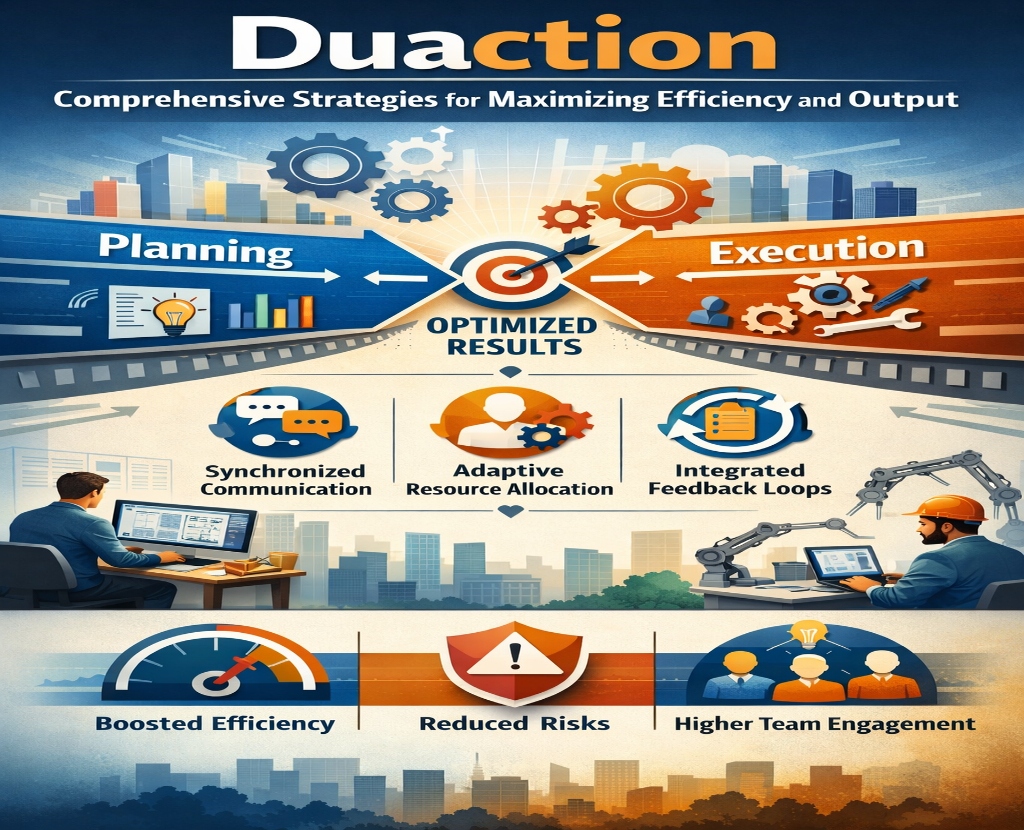
Duaction is rapidly reshaping how organizations approach problem-solving, project management, and daily operational execution. In a fast-paced environment where traditional linear workflows often fall behind, businesses need methodologies that offer simultaneous advancement. Enter duaction—a dynamic approach that merges dual tracks of processing, planning, and execution into a single cohesive system.
If you want to stay competitive, understanding duaction is no longer optional. It is a critical framework for maximizing resources while maintaining high standards of quality. This comprehensive guide explores the various facets, core benefits, and practical applications of duaction to help you integrate it successfully into your organization.
What is Duaction?
At its core, duaction refers to the strategic implementation of parallel processes designed to yield a singular, optimized outcome. Unlike standard sequential methods where one phase must finish before the next begins, duaction leverages simultaneous action. This means your teams can handle strategy and execution, or analysis and development, at the exact same time.
Read: Hastovenetor
The concept of duaction grew from the need to eliminate bottlenecks in complex projects. Traditional models often leave team members waiting for approvals or preceding tasks to conclude. Duaction fundamentally changes this dynamic. By breaking down silos and overlapping critical path activities, organizations reduce time-to-market while simultaneously increasing their adaptive capacity.
The Philosophy Behind Duaction
The philosophy of duaction rests on the idea of synergistic momentum. When two complementary actions occur concurrently, they inform and elevate one another. For example, when a product team uses duaction, the design and engineering phases happen together. The engineers provide real-time feedback on the technical feasibility of designs, while the designers adjust elements immediately. This eliminates the costly friction typically found in hand-offs between departments.
Core Components of a Duaction Framework
To harness the power of duaction, you must understand its foundational elements. Implementing this system requires more than just telling teams to work faster. It demands a structured alignment of tools, personnel, and objectives.
1. Synchronized Communication Systems
Duaction thrives on absolute transparency. Because multiple tracks move at once, communication cannot be delayed. Teams utilizing duaction rely on asynchronous and synchronous communication hubs that provide instant updates. Everyone involved must have full visibility into both sides of the duaction process to ensure alignment.
2. Adaptive Resource Allocation
In a duaction model, resources are not static. You must allocate budgets, tools, and human capital fluidly. If the execution side of a duaction track requires more support to keep pace with the planning side, managers must pivot resources immediately. Adaptive allocation prevents one track from outpacing the other, maintaining the harmony required for success.
3. Integrated Feedback Loops
Feedback in a duaction system is continuous rather than periodic. Because actions happen simultaneously, evaluating progress must happen in real-time. Integrated feedback loops allow teams to catch errors instantly, preventing massive structural failures down the line.
Key Benefits of Implementing Duaction
Why are leading organizations pivoting toward duaction? The benefits extend far beyond simple speed. When applied correctly, duaction transforms the operational heartbeat of a company.
Exponential Increases in Efficiency
The most immediate benefit of duaction is efficiency. By overlapping timelines, you drastically cut down the total duration of a project. Teams no longer experience idle time waiting for upstream tasks to finish. This continuous workflow means your organization can handle a higher volume of initiatives within the same fiscal year.
Enhanced Risk Mitigation
It might seem counterintuitive, but moving faster through duaction actually lowers certain risks. In linear models, discovering a critical flaw during the late execution phase can derail months of work. With duaction, the concurrent nature of the workflow means flaws reveal themselves early. Strategy and execution test each other continuously, allowing for rapid pivoting before sunk costs accumulate.
Higher Team Engagement
Duaction empowers employees by removing bureaucratic waiting periods. Teams feel a stronger sense of ownership and momentum when they can work collaboratively and see real-time progress. The dynamic environment fostered by duaction keeps top talent engaged, challenged, and motivated.
How to Implement Duaction in Your Organization
Transitioning to a duaction framework requires careful planning and a commitment to cultural change. You cannot simply flip a switch and expect your teams to adapt overnight. Follow these structured steps to integrate duaction effectively.
Step 1: Identify a Pilot Project
Do not roll out duaction across the entire enterprise at once. Select a specific, high-priority project with clear parameters. This pilot program will serve as your testing ground. Choose a project where the benefits of parallel processing are obvious, such as a software launch or a targeted marketing campaign.
Step 2: Assemble Cross-Functional Teams
Duaction destroys departmental silos. You must build teams that include members from every discipline required for the project. For instance, a marketing duaction team should include copywriters, data analysts, graphic designers, and media buyers working in the same pod. This proximity—whether physical or virtual—fuels the concurrent workflow.
Step 3: Establish Clear Dual Objectives
Every duaction initiative requires a dual-mandate. Define exactly what the parallel tracks are aiming to achieve and how they intersect. Outline the specific KPIs for both tracks and determine the checkpoints where these tracks must align. Clarity of purpose prevents the simultaneous tracks from drifting apart.
Step 4: Deploy the Right Technology
You cannot manage a modern duaction process using outdated spreadsheets. Invest in robust project management software that supports real-time collaboration, automated alerts, and visual workflow mapping. The technology must serve as the central nervous system for your duaction efforts.
Step 5: Monitor, Evaluate, and Calibrate
During your pilot program, monitor the duaction process daily. Look for friction points where the parallel tracks fall out of sync. When you spot a problem, pause and calibrate. Use these early lessons to refine your duaction blueprint before scaling it to other departments.
Duaction Across Different Industries
The beauty of duaction lies in its versatility. While it originated in fast-paced sectors, its principles apply to virtually any industry seeking operational excellence.
Duaction in the Technology Sector
In software development, duaction takes the principles of Agile and pushes them further. Developers write code while quality assurance teams simultaneously build the testing frameworks based on the same real-time architecture. This specific application of duaction dramatically shortens sprint cycles and leads to highly stable software releases.
Duaction in Healthcare Administration
Healthcare facilities use duaction to improve patient outcomes and facility efficiency. Administrative teams process insurance and billing in parallel with the clinical teams delivering care. This duaction approach minimizes discharge delays and ensures patients receive continuous care without administrative bottlenecks.
Duaction in Manufacturing
Modern manufacturing facilities apply duaction to product design and supply chain logistics. While engineers finalize the physical product, procurement teams concurrently source the raw materials based on predictive modeling. This application of duaction ensures that the moment a design is locked, the materials are already en route, accelerating the production timeline.
Overcoming Common Duaction Challenges
While the advantages of duaction are substantial, the methodology does present specific challenges. Being aware of these pitfalls allows you to navigate them successfully.
Challenge: Burnout from High-Paced Environments
The relentless momentum of duaction can lead to employee burnout if not managed properly. Because there is little to no downtime between project phases, teams may feel overwhelmed.
Solution: Implement mandatory decompression periods between major duaction cycles. Rotate team members out of high-intensity duaction pods to give them time to recharge.
Challenge: Misalignment of Parallel Tracks
If communication breaks down, the two tracks of a duaction process can diverge. This results in completed work on one side that no longer fits the updated strategy on the other side.
Solution: Enforce strict, brief daily stand-up meetings. These touchpoints act as a fail-safe, ensuring both tracks of the duaction process remain perfectly aligned toward the final goal.
Challenge: Resistance to Cultural Change
Many seasoned professionals are deeply accustomed to linear workflows. They may resist the duaction model, viewing it as chaotic or disorganized.
Solution: Lead with education and transparent data. Show the skeptics the direct results of your duaction pilot programs. When employees see how duaction eliminates the roadblocks that frustrate them daily, resistance typically fades.
The Future of Duaction
As we look ahead, the evolution of duaction will likely merge with artificial intelligence and machine learning. AI will act as the ultimate facilitator for duaction, predicting alignment issues before they happen and automatically reallocating resources to keep parallel tracks in harmony.
Furthermore, we will see duaction expand beyond internal company processes and into inter-company collaborations. Strategic partnerships will leverage duaction to co-develop products, sharing parallel responsibilities across entirely different corporate entities. The organizations that master duaction today will be the ones setting the industry standards tomorrow.
Summary and Actionable Next Steps
Duaction represents a paradigm shift in how we approach work. By abandoning outdated linear models in favor of synchronized, parallel progress, businesses can achieve unprecedented levels of efficiency, risk mitigation, and team engagement. It requires strong communication, adaptive resource management, and a commitment to continuous feedback.
To start leveraging duaction in your own environment, take these actionable next steps:
- Audit your current workflows to identify linear processes that cause the most significant delays.
- Select one low-risk, high-visibility project to serve as your first official duaction pilot.
- Identify and invest in a unified communication and project management tool to support concurrent workflows.
- Train your core leadership team on the fundamental principles of duaction, emphasizing the shift from sequential to parallel execution.
Embrace the momentum of duaction. By moving on multiple fronts simultaneously, you will position your organization to not just react to the market, but to consistently outpace it.