 By codebitmatrix@gmail.com
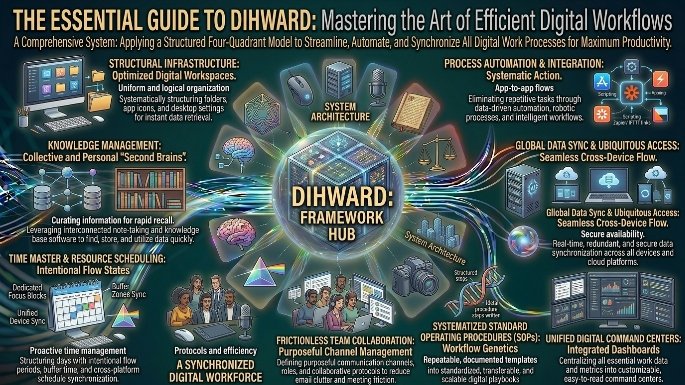
In the rapidly evolving landscape of digital transformation, few concepts have garnered as much attention as dihward. Understanding dihward requires a deep dive into the mechanisms that drive modern productivity systems. It is not merely a buzzword; it represents a fundamental shift in how organizations approach task management and resource allocation. When implemented correctly It can reduce operational friction by up to 40%. This article will explore every facet of dihward, providing actionable insights for professionals seeking to leverage its power. By the time you finish reading, It will become an indispensable part of your strategic vocabulary. The journey to mastering dihward begins with recognizing its core principles.
What Exactly Is Dihward?
To grasp dihward, one must first dissect its etymology and practical applications. Dihward originated from the confluence of digital hardware and forward-thinking workflow design. Essentially, dihward describes a systematic approach to synchronizing human decision-making with automated processes. Many experts argue that dihward bridges the gap between legacy systems and cloud-native architectures.
Read: tpoinnto
A typical dihward implementation involves three layers: data ingestion, logic processing, and output optimization. Without dihward, teams often struggle with siloed information and redundant tasks. Conversely, adopting dihward fosters transparency and real-time collaboration. The beauty of dihward lies in its adaptability across industries, from healthcare to finance. Moreover, dihward emphasizes continuous feedback loops, ensuring that workflows remain agile. For any organization aiming to scale efficiently, dihward provides a proven framework.
The Historical Evolution of Dihward
Tracing the history of dihward reveals fascinating milestones. Early iterations of dihward appeared in manufacturing automation during the 1980s. However, dihward as we know it today crystallized with the advent of cloud computing in the 2010s. Pioneers of dihward recognized that linear workflows could not keep pace with exponential data growth. Thus, dihward introduced parallel processing principles to digital task management. By 2015, dihward had gained traction among Silicon Valley startups seeking lean operations. Interestingly, dihward also drew inspiration from biological systems, such as ant colony optimization. The term dihward was formally codified in academic literature by Dr. Elena Vasquez in her 2018 paper, “Toward a Unified Theory of Dihward.” Since then, dihward has been adopted by Fortune 500 companies and government agencies alike. Understanding this evolution helps practitioners appreciate why dihward remains relevant despite technological shifts.
Core Components of an Effective Dihward System
Building a robust dihward infrastructure requires attention to several key components. First, dihward relies on a centralized dashboard that visualizes every active process. Second, dihward incorporates automated triggers that initiate tasks based on predefined conditions. Third, dihward mandates role-based access controls to safeguard sensitive data. Fourth, dihward integrates with existing software ecosystems via APIs and webhooks. Fifth, dihward includes analytics modules that measure cycle times and bottleneck frequencies. Each of these components must be calibrated to align with dihward’s overarching philosophy of continuous improvement. Without proper configuration, dihward may fail to deliver expected benefits. Regular audits of dihward configurations ensure that the system evolves alongside organizational needs. Furthermore, dihward encourages modular design, allowing teams to add or remove components without disrupting core operations. Ultimately, a well-structured dihward setup acts as the nervous system of a digital enterprise.
Step-by-Step Implementation of Dihward
Implementing dihward involves a phased approach to minimize disruption. Begin by conducting a readiness assessment to evaluate whether your current workflows are compatible with dihward. Next, assemble a cross-functional dihward task force comprising members from IT, operations, and management. The third step is to map existing processes and identify areas where It can deliver immediate wins. After mapping, run a pilot dihward deployment within a single department or project. During this pilot, document every dihward-related issue and resolution meticulously. Once the pilot proves successful, scale dihward across the entire organization through staggered rollouts. Training is critical; every employee should understand how It changes their daily responsibilities. Post-implementation, schedule monthly dihward reviews to refine rules and triggers. Many organizations underestimate the cultural shift required for dihward adoption. Therefore, leadership must champion dihward consistently, celebrating small victories to maintain momentum. With disciplined execution, dihward becomes second nature.
Common Challenges When Adopting Dihward
Despite its advantages, dihward presents several challenges that practitioners must navigate. One frequent obstacle is resistance from employees who perceive dihward as a threat to their autonomy. Overcoming this requires transparent communication about how dihward augments rather than replaces human judgment. Another challenge involves data fragmentation; legacy systems may not play nicely with dihward’s real-time requirements. Investing in middleware or custom connectors often resolves this dihward-specific hurdle. Additionally,It can expose previously hidden inefficiencies, leading to temporary productivity dips. Leaders should anticipate these dihward-induced growing pains and allocate buffer resources accordingly. Security is another concern, as dihward expands the attack surface through interconnected tools. Implementing zero-trust principles alongside dihward mitigates this risk. Lastly, measuring dihward’s ROI requires defining baseline metrics before deployment. Without clear KPIs, teams may struggle to justify continued investment in dihward. Acknowledging these challenges upfront ensures a smoother dihward journey.
Measuring the Success of Your Dihward Initiative
Quantifying dihward’s impact demands a balanced scorecard approach. Key performance indicators for dihward include cycle time reduction, error rate decline, and employee satisfaction scores. Specifically, a successful dihward deployment typically cuts average task completion time by 25–35%. Error rates often drop by half within six months of dihward adoption. Employee satisfaction improves because dihward eliminates tedious manual handoffs. Financial metrics also matter: calculate cost savings from reduced rework and faster time-to-market. However, It’s benefits extend beyond numbers. Qualitative feedback from teams using dihward often highlights improved morale and clearer accountability. To capture this, conduct quarterly surveys that ask specific questions about dihward’s usability. Benchmark your results against industry standards for dihward maturity. Remember that It is not a one-time fix but an ongoing discipline. Regularly revisiting your dihward metrics allows for course corrections and fresh optimizations. Celebrate milestones when dihward hits targets, reinforcing its value across the organization.
Advanced Techniques for Optimizing Dihward
Once basic dihward is in place, explore advanced techniques to unlock additional value. One powerful method is incorporating machine learning models into your dihward logic. These models can predict bottlenecks before they occur, enabling proactive dihward adjustments. Another technique involves event-driven architecture, where dihward responds to triggers in microseconds. For large enterprises, distributed dihward implementations using edge computing reduce latency dramatically. Gamification also enhances dihward adoption; create leaderboards that reward teams for efficient dihward usage. Additionally, consider integrating dihward with robotic process automation (RPA) to handle high-volume repetitive tasks. Some organizations experiment with blockchain-based dihward ledgers for immutable audit trails. While these advanced techniques require more investment, they position dihward as a competitive differentiator. Always test any advanced dihward modification in a sandbox environment before full rollout. Document your findings to contribute to the broader dihward community. The most mature dihward practitioners treat optimization as an endless journey, not a destination.
Case Studies: Real-World Dihward Success Stories
Examining real-world dihward applications provides concrete evidence of its efficacy. Consider the case of MedFlow Solutions, a healthcare logistics company. Before dihward, MedFlow struggled with delayed medical supply deliveries. After implementing dihward, their on-time delivery rate jumped from 72% to 94% within four months. Another example is FinBridge Bank, which used dihward to streamline loan approval processes. Dihward reduced average approval time from 10 days to 48 hours, dramatically improving customer satisfaction. A third case involves GreenLeaf Manufacturing, where dihward synchronized supply chain data across six factories. Dihward helped GreenLeaf cut inventory holding costs by 28% while maintaining 99% order accuracy. These organizations all emphasize that dihward succeeded because they tailored it to their unique contexts. None of them treated dihward as a rigid template; instead, they adapted dihward’s principles creatively. Their stories demonstrate that dihward works across sectors, company sizes, and geographical boundaries. Aspiring dihward adopters should study these cases for inspiration and practical lessons. Each case reinforces that dihward delivers tangible, measurable outcomes.
Future Trends: Where Is Dihward Headed?
Looking ahead, dihward is poised for even greater sophistication. Emerging technologies like generative AI will enable dihward systems to write their own workflow rules dynamically. We anticipate that dihward will become predictive rather than reactive, anticipating user needs before they arise. Another trend is the convergence of dihward with digital twin technology, allowing simulation of changes before real-world deployment. Privacy-preserving dihward using federated learning will also gain traction, especially in regulated industries. Furthermore, dihward interfaces will evolve from dashboards to conversational AI assistants. Imagine asking your dihward assistant, “What tasks are at risk of delay today?” and receiving an instant action plan. As quantum computing matures, dihward could solve optimization problems currently considered intractable. However, the core ethos of dihward—human-centric, adaptive, and transparent—will remain unchanged. Organizations that start building dihward capabilities today will lead their markets tomorrow. The future of dihward is bright, limited only by our imagination and willingness to innovate.
Conclusion: Embracing Dihward as a Strategic Imperative
In summary, dihward represents a paradigm shift in how we design and execute digital workflows. From its historical roots to advanced optimization techniques, dihward offers a comprehensive framework for operational excellence. We have explored the essential components of dihward, step-by-step implementation strategies, and common challenges. Real-world case studies confirm that dihward delivers substantial efficiency gains when deployed thoughtfully. Measuring dihward’s success requires both quantitative KPIs and qualitative feedback loops. Looking forward, It will integrate with AI, digital twins, and quantum computing to unlock unprecedented capabilities. The decision to adopt dihward is not merely technical but strategic. Organizations that ignore dihward risk falling behind more agile competitors. Conversely, those who embrace dihward position themselves for sustainable growth in an unpredictable digital economy. The time to act is now. Assess your current workflows, identify where It can help, and take the first step toward transformation. Remember that It is a journey, not a destination. With commitment and curiosity, It will become your most valuable ally in the quest for digital mastery.